
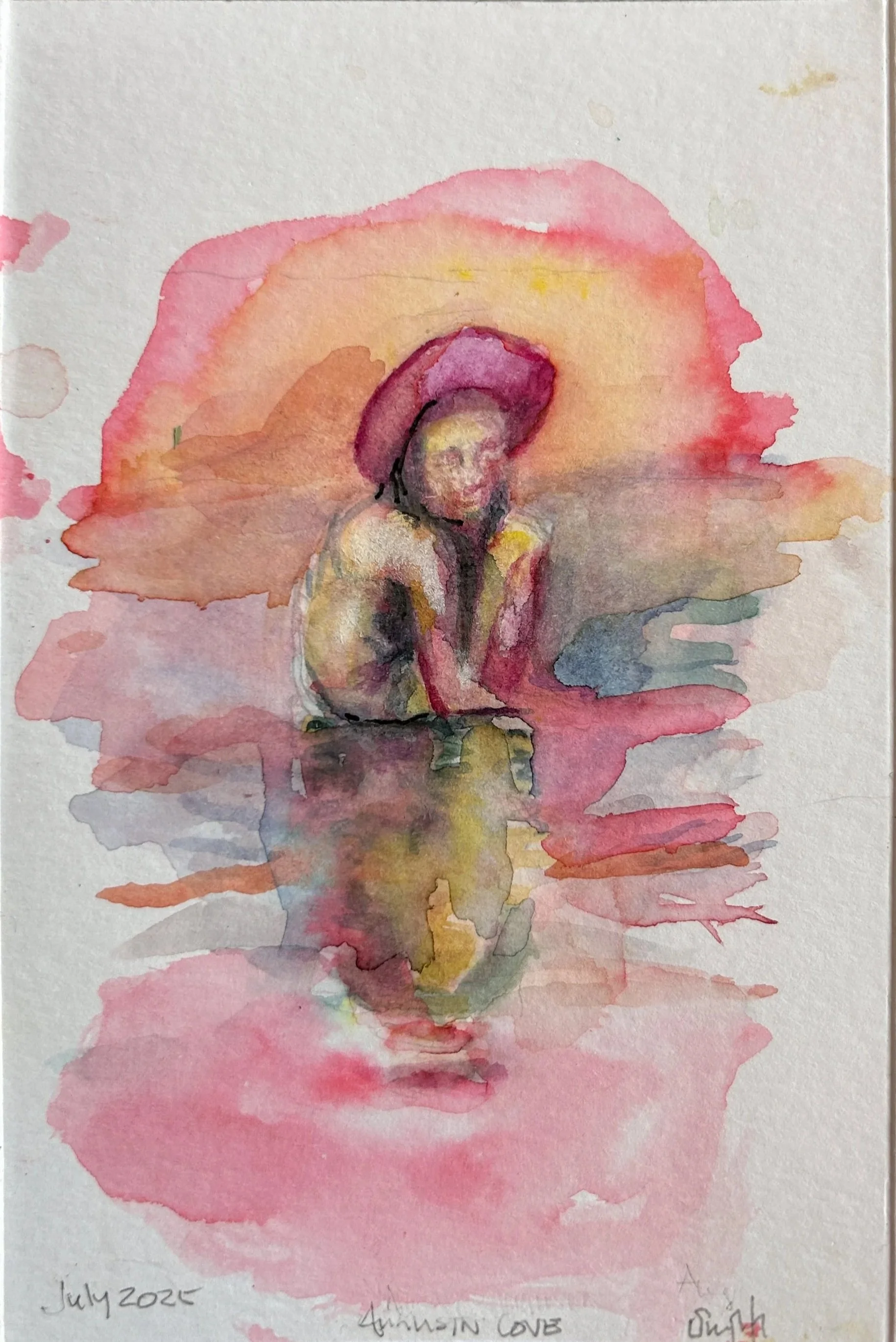
Custom Paintings
Commission a bespoke watercolor painting tailored specifically to your needs. I work with clients to produce custom, made-to-order artworks that perfectly capture their vision. Each original piece is crafted using professional-grade materials, exclusively painted on heavy 400 lb Arches watercolor paper for an exquisite finish and archival longevity.
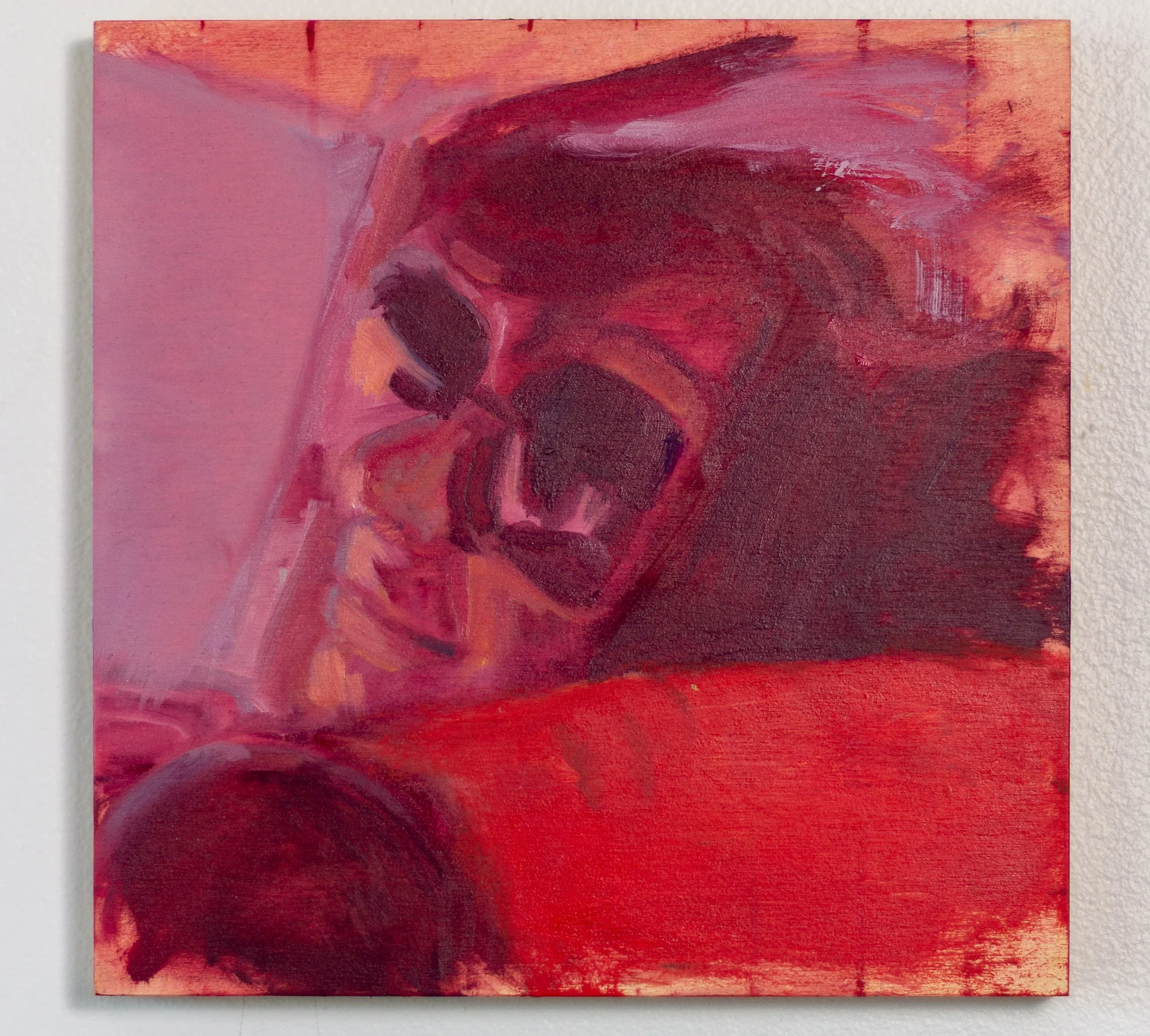
Tinted Lenses
Inspirée d'une vieille photographie de famille des années 1970, Tinted Lenses est une peinture intime de 9 x 9 po sur panneau de bois. Elle capture la nostalgie si particulière de l'intérieur d'une voiture classique avec une telle intensité que l'on peut presque sentir l'odeur des sièges de l'époque.
Tinted Lenses
Based on an old family photograph from the 1970s, Tinted Lenses is an intimate 9 x 9 inch painting on a wood block panel. It captures the distinct, hazy nostalgia of a classic car interior so vividly that you can almost smell the vintage upholstery.
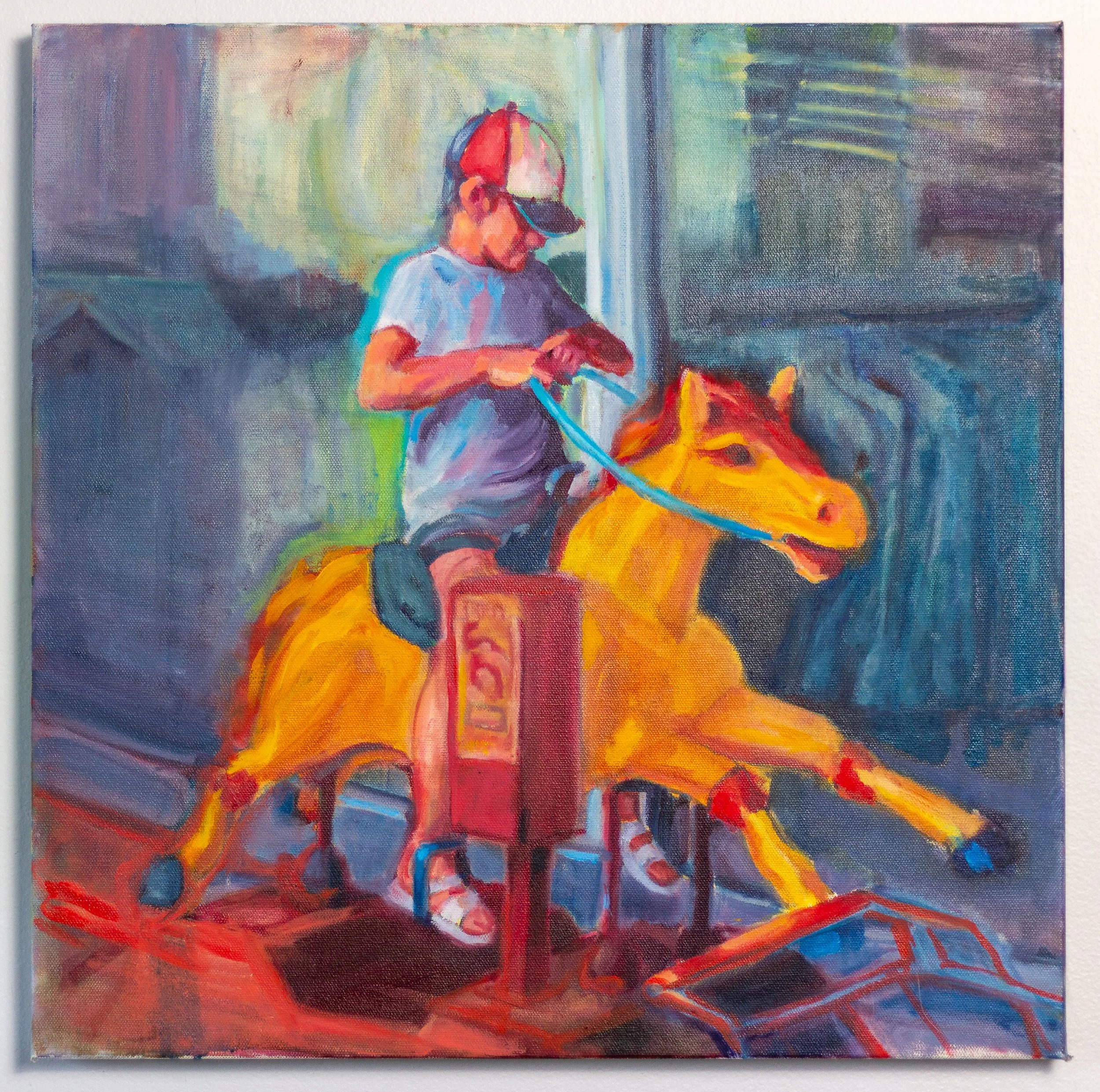
Coin Operated
Inspirée d'une photographie de famille des années 1970, Coin Operated capture la joie classique et universelle de l'enfance : faire un tour sur les manèges mécaniques à pièces devant l'épicerie du coin. C'est un regard nostalgique sur les moments simples et joyeux du quotidien.
Coin Operated
Coin Operated is based on a family photo from the 1970s. It captures a classic childhood joy of coin operated rides outside of grocery stores.
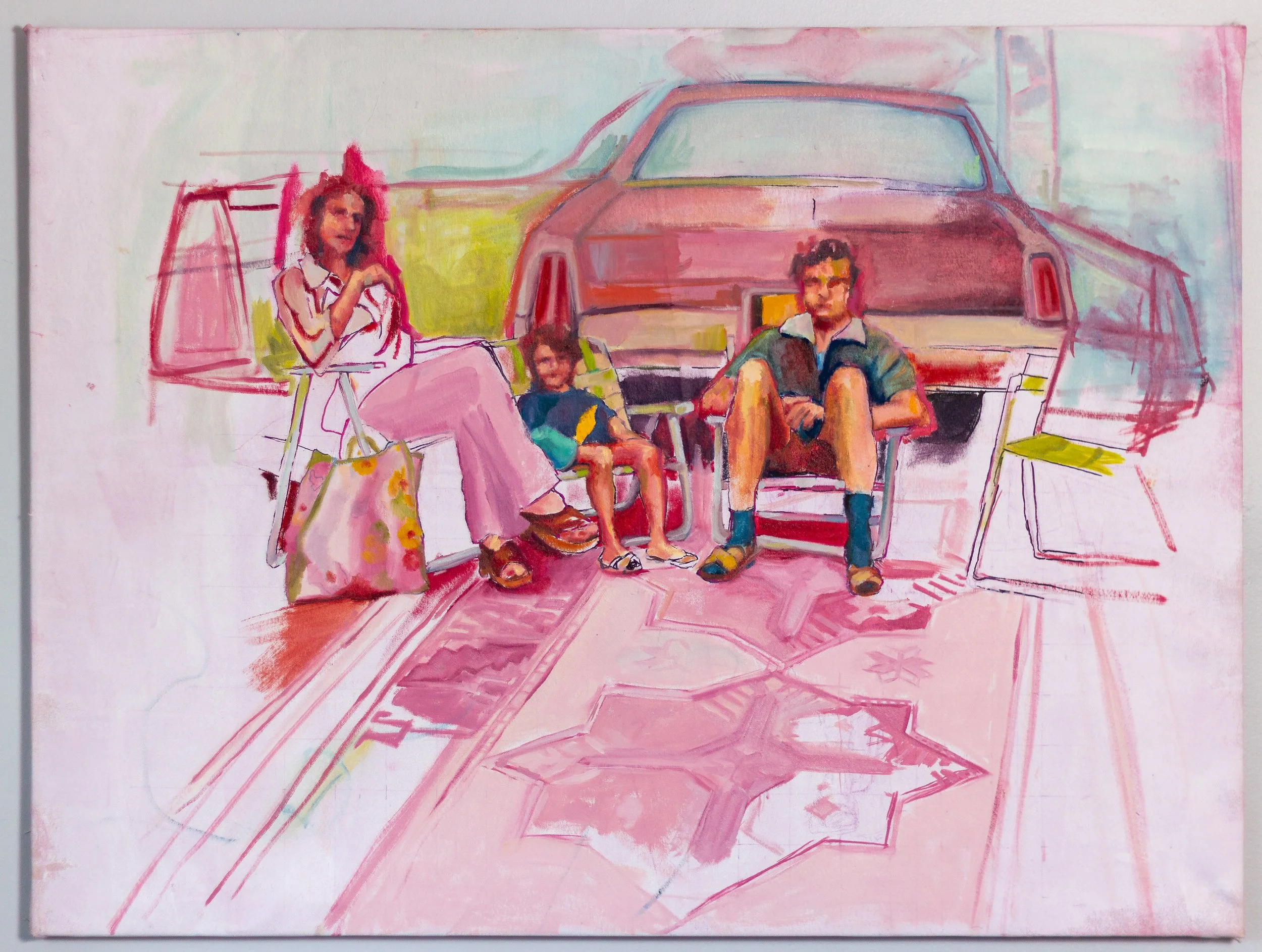
Patterned Ground
Inspirée d'une photographie de famille de la fin des années 1970, Patterned Ground illustre les parents et le frère de l'artiste assis derrière leur emblématique et bien-aimée Chrysler New Yorker. Cette toile explore la nostalgie et l'essence classique du Canadiana à travers le regard de nouveaux arrivants.
Patterned Ground
Patterned Ground is inspired by a family photo of the artists brother and parents sitting behind their iconic and believed Chrysler New Yorker in the late 1970s. It touches on nostalgia and classic 1970s Canadians through the eyes of newly arrived immigrants.
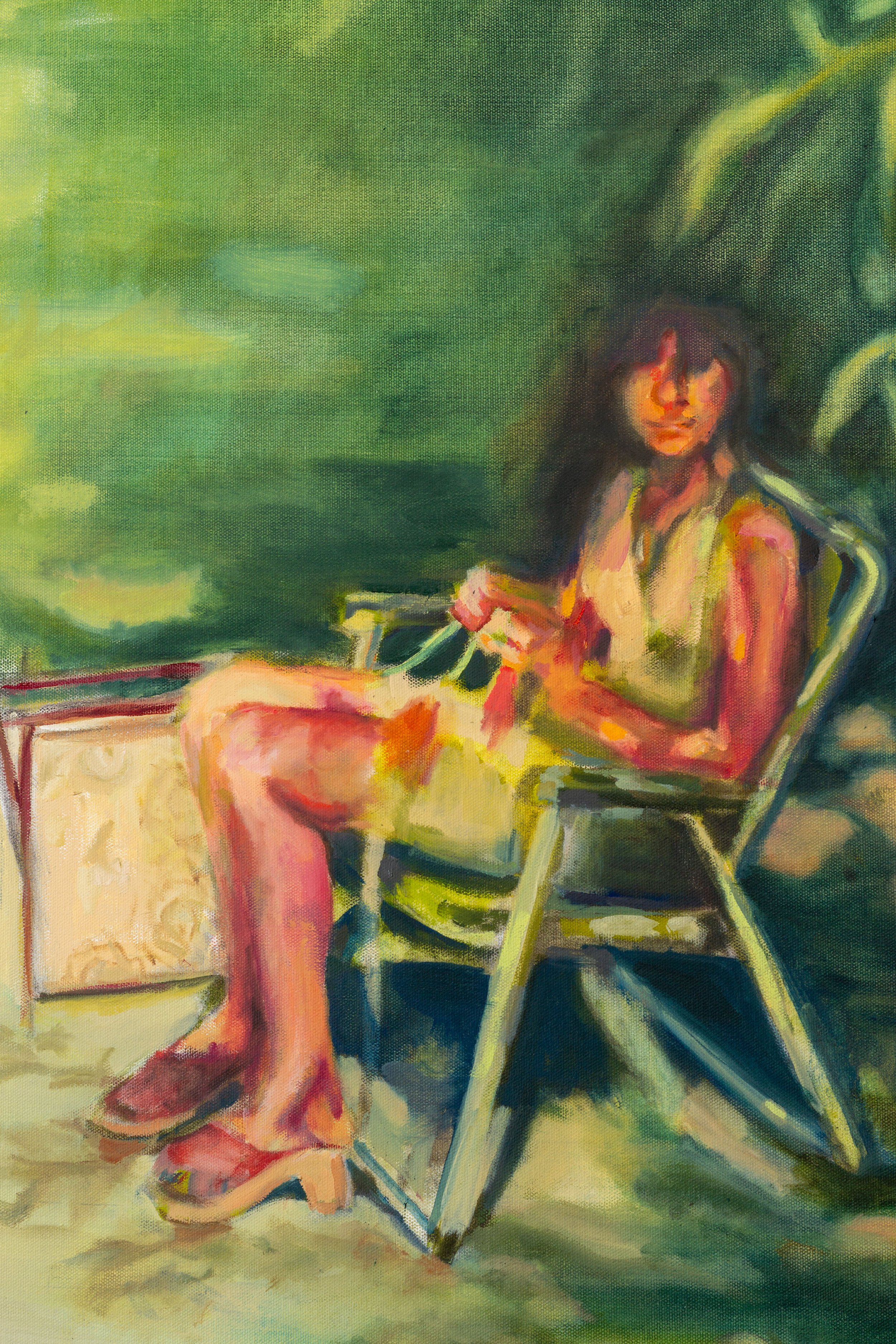
Shadow Patterns
Based on a quiet moment beneath a tree, Shadow Patterns explores how shifting light can alter perception. The figure is partially obscured by the shadows of leaves, creating a surface that feels both present and unstable. What begins as a recognizable scene slowly dissolves into pattern, where body and ground become difficult to separate.
Shadow Patterns
Dans Shadow Patterns, une figure assise est fragmentée par une lumière tachetée filtrant à travers les feuilles. Cette peinture figurative explore des verts nuancés ponctués de touches de pêche, créant un contraste subtil qui anime la surface. Les ombres adoucissent et perturbent le corps, brouillant ses contours et faisant basculer l’image vers l’abstraction. Entre figuration et dissolution, l’œuvre s’intéresse à la manière dont la couleur, la lumière et le motif transforment notre perception de la figure.
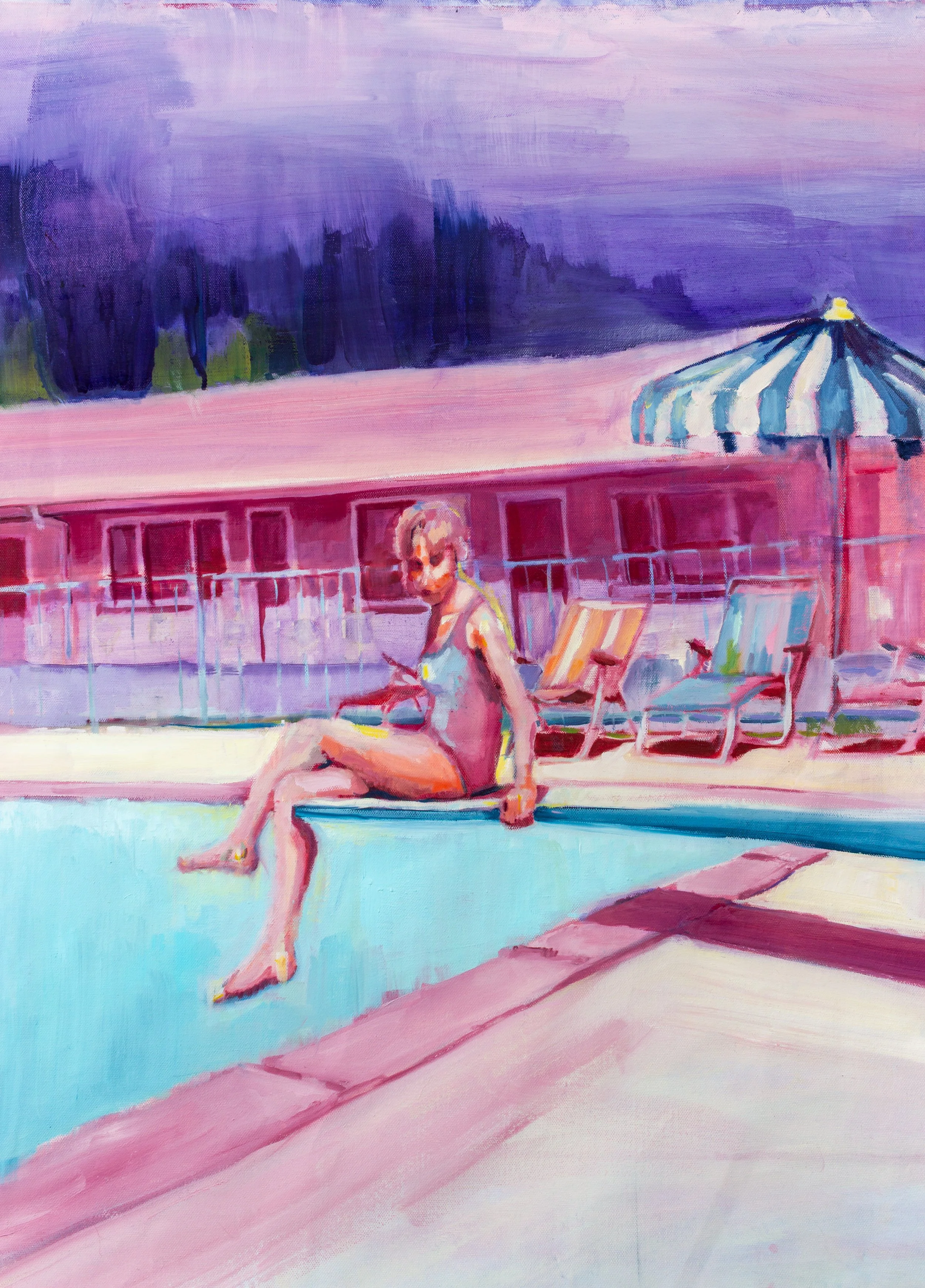
Beneath the Surface
Beneath the Surface: Psychological Portraits in Domestic Space transforme des photographies familiales en peintures de grand format explorant le malaise au cœur du familier. Inspirée d’une image des années 1970 de ma mère près d’une piscine de motel déserte, la série révèle une tension entre calme apparent et vulnérabilité sous-jacente.
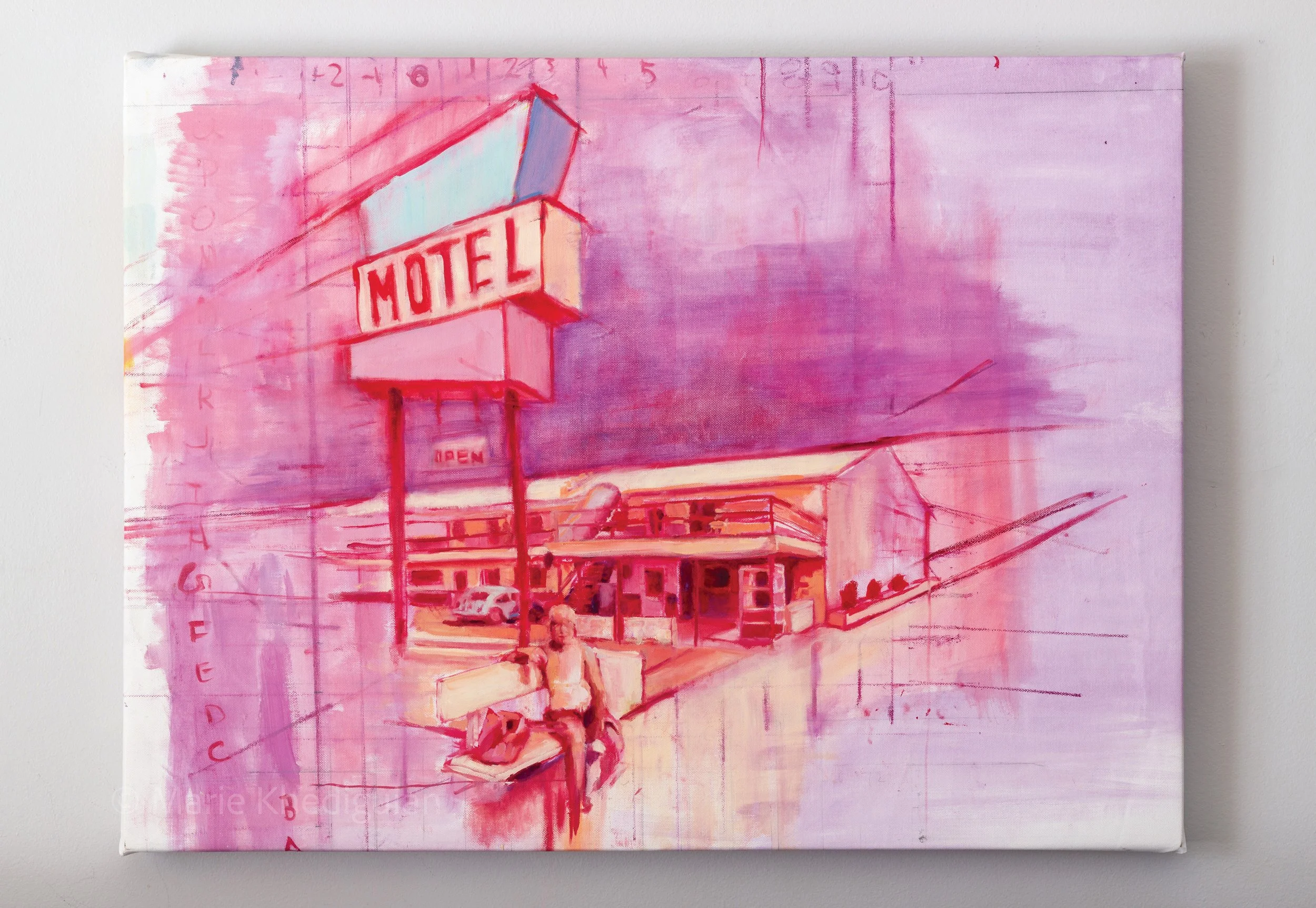
Charline Motel
À partir d’une photographie familiale, Charline Motel explore la mémoire migrante, la nostalgie partagée et les rituels du voyage.
Charline Motel
A painting drawn from a family photograph, Charline Motel explores immigrant arrival, shared nostalgia, and the everyday rituals of travel and belonging.
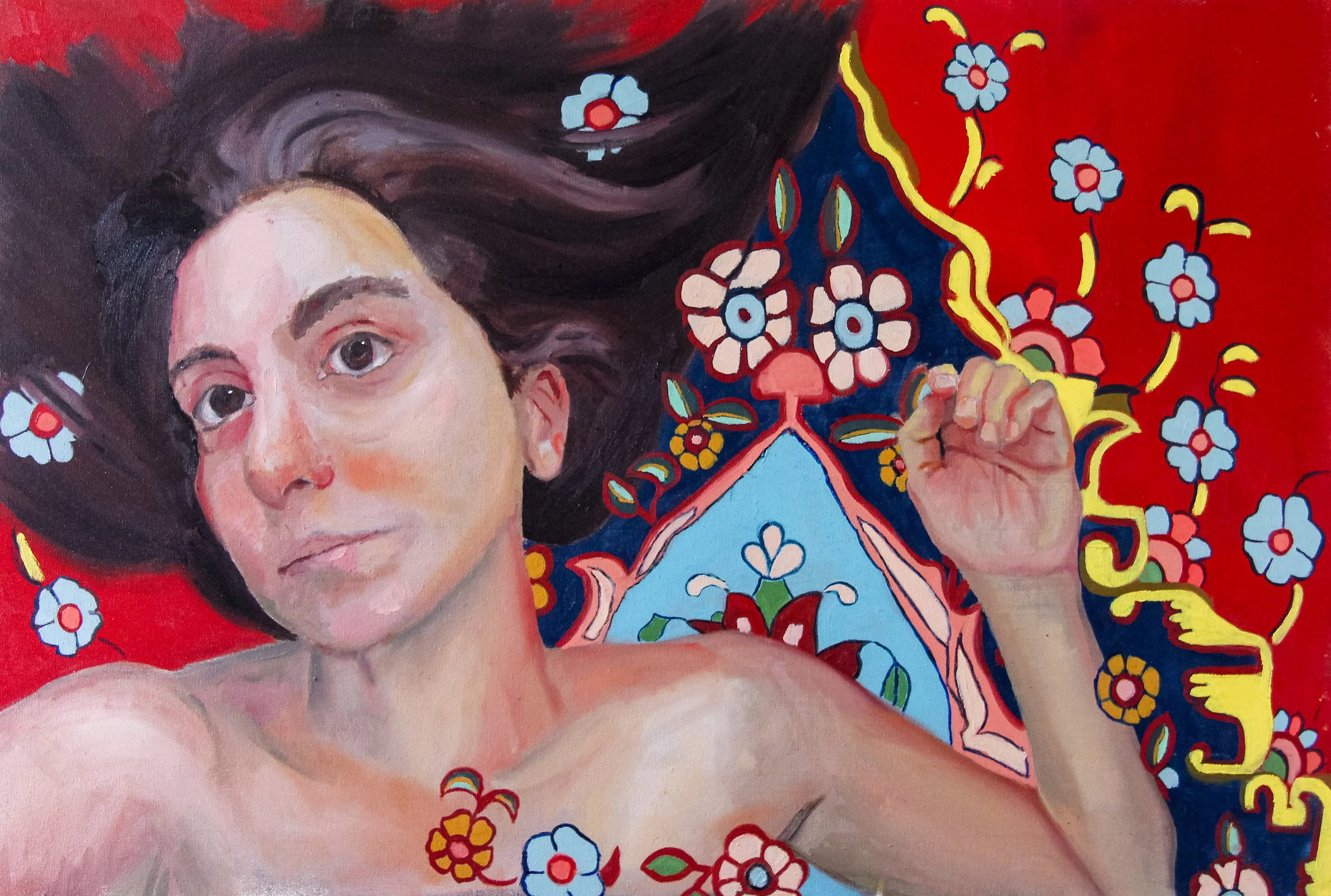
Autoportrait
Cette peinture à l’huile de 30 × 40 pouces a été réalisée en réponse à un projet invitant les artistes à s’inspirer d’une œuvre de la collection permanente du Musée des beaux-arts de Montréal. J’ai choisi Simeon the God Receiver de Kehinde Wiley, attirée par la manière dont il inscrit des corps contemporains dans des cadres décoratifs chargés d’histoire.
Dans cet autoportrait, ma figure repose sur un tapis arménien, un objet porteur de mémoire culturelle, de rituels domestiques et de transmission familiale. Le corps semble se fondre dans les motifs du tapis, brouillant la frontière entre la figure et le fond. Cette dissolution évoque à la fois l’appartenance et l’effacement, une tension discrète entre le fait d’être portée par un héritage et celui d’y être absorbée.
L’œuvre s’inscrit dans ma recherche continue autour des archives familiales, de la diaspora et des façons dont l’identité se construit à travers des espaces et des objets hérités. En intégrant mon propre corps au tapis, la peinture devient une méditation sur la visibilité, la mémoire culturelle et la ligne fragile entre l’individu et l’histoire collective.
Self-Portrait
This 30 × 40 inch oil painting was created in response to a prompt inviting artists to engage with a work from the Montreal Museum of Fine Arts’ permanent collection. I chose Simeon the God Receiver by Kehinde Wiley, drawn to the way Wiley situates contemporary bodies within ornate, historically loaded decorative frameworks.
In this self-portrait, my figure rests on an Armenian carpet, a surface that carries cultural memory, domestic ritual, and lineage. The body appears to melt into the carpet’s patterns, blurring the boundary between figure and ground. This dissolution suggests both belonging and erasure, a quiet tension between being held by heritage and being absorbed by it.
The work reflects my ongoing interest in family archives, diaspora, and the ways identity is shaped through inherited spaces and objects. By embedding my own body within the carpet, the painting becomes a meditation on visibility, cultural memory, and the fragile line between selfhood and collective history.
Beneath the Surface
Beneath the Surface: Psychological Portraits in Domestic Space transforms old family photographs into large-scale paintings that explore unease within the familiar. One of the central images is based on a 1970s photograph of my mother sitting alone beside a deserted motel pool. At first glance, the scene feels calm and still, yet beneath that stillness is something exposed and suspended. That tension lies at the heart of the work.

Beneath the Surface
Beneath the Surface: Psychological Portraits in Domestic Space transforms old family photographs into large-scale paintings that explore unease within the familiar. One of the central images is based on a 1970s photograph of my mother sitting alone beside a deserted motel pool. At first glance, the scene feels calm and still, yet beneath that stillness is something exposed and suspended. That tension lies at the heart of the work.
Beneath the Surface
Sous la surface : portraits psychologiques dans l'espace domestique transforme de vieilles photos de famille en peintures grand format qui explorent le malaise au sein du familier. L'une des images centrales est basée sur une photo de ma mère prise dans les années 1970, assise seule au bord de la piscine déserte d'un motel. À première vue, la scène semble calme et immobile, mais sous cette tranquillité se cache quelque chose d'exposé et de suspendu. Cette tension est au cœur de l'œuvre.
Créé pendant ma résidence estivale de 2025 à la galerie VAV à Montréal, ce projet m'a permis de travailler sur plusieurs grandes peintures à la fois, de dessiner directement sur les murs et de tester comment les œuvres pouvaient cohabiter dans l'espace. Inspiré par des artistes tels que David Hockney, Edward Hopper et Sergei Parajanov, j'explore comment des moments calmes et ordinaires peuvent révéler une profondeur psychologique cachée.
Monster
“Monster" reimagines the story of Medusa, a figure often misunderstood and vilified in mythology. This meticulously crafted print explores themes of strength, misrepresentation, and the resilience of women throughout history.
As a reduction print, the blocks used to create this piece have been carved down during the process, meaning this edition will never be reproduced in the same way again. Each print is handmade, making every piece unique.
Perfect for art lovers and mythology enthusiasts, this rare and meaningful artwork is both a conversation starter and a stunning addition to your collection.

Échouer vers l’éclat
Échouer vers l’éclat (16" x 20", huile, 2025) est une exploration profondément personnelle du deuil, de l’héritage et du processus artistique. Inspirée par L’Artiste et sa mère d’Arshile Gorky, cette œuvre réfléchit à la tension entre intention et résultat, et à la manière dont les « échecs » répétés peuvent malgré tout avoir du sens. Le portrait de ma mère disparue a été construit, effacé et refait à plusieurs reprises, devenant à la fois une peinture et un témoignage de lutte. Découvrez mon article de blog décrivant le processus ici pour un regard plus approfondi sur l’évolution de cette pièce.
Failing Towards Brilliance
Failing Towards Brilliance (16" x 20", oil, 2025) is a deeply personal exploration of grief, heritage, and artistic process. Inspired by Arshile Gorky’s The Artist and His Mother, this work reflects on the tension between intention and outcome, and how repeated “failures” can still hold meaning. The portrait of my late mother was built, erased, and remade multiple times, becoming both a painting and a record of struggle. It questions whether the act of reworking can be a form of honoring. See my blog post describing the process here for a deeper look at the evolution of this piece.